Leon Butler · 17 October 2026
The Role of Real-Time Collaboration Enhances Volunteer Coordination in Hybrid Charity Events Using Specialized Platforms
Hybrid charity events combine in-person gatherings with virtual participation, and specialized platforms now deliver real-time collaboration tools that synchronize volunteer activities across both formats. These systems track task assignments, update availability status instantly, and route communications without delays that once fragmented teams during large-scale fundraisers.
Core Components of Hybrid Event Coordination
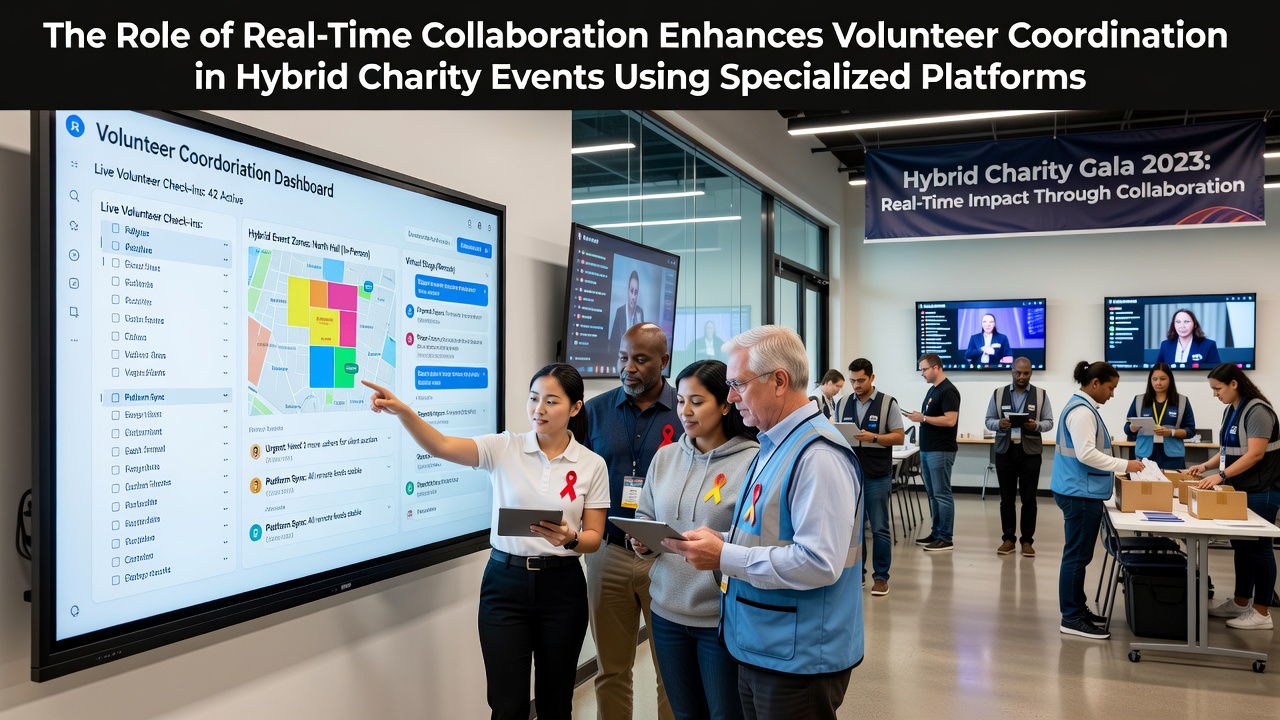
Hybrid events require simultaneous management of physical logistics and digital access points, while real-time platforms consolidate volunteer schedules, resource inventories, and role-specific alerts into shared interfaces. Data from multiple nonprofit technology assessments shows that organizations adopting these tools report measurable reductions in scheduling conflicts during peak campaign periods. Platforms integrate mapping features that assign volunteers to on-site stations or remote moderation queues based on live capacity indicators.
Platform Features Driving Coordination Gains
Specialized platforms include live chat channels segmented by event zone, shared document editing for shift logs, and automated notifications that propagate changes across mobile and desktop views. Researchers at several academic centers have documented how these functions allow coordinators to reassign tasks within minutes when weather or technical issues alter attendance projections. One documented case involved a regional food drive where instant status updates prevented duplicate deliveries and redirected excess volunteers to virtual outreach segments.
Integration with external calendars and payment processors further streamlines processes by pulling confirmed registrations directly into volunteer dashboards. Observers note that such connectivity reduces administrative overhead because updates flow automatically rather than requiring manual reconciliation at multiple checkpoints.
Evidence from Recent Implementations
Studies conducted through 2025 indicate that hybrid events using dedicated collaboration suites achieved higher completion rates for volunteer-dependent activities compared with those relying on email chains or static spreadsheets. Figures released by the Australian Charities and Not-for-profits Commission reveal increased participation metrics when organizations deployed platforms offering granular permission controls and audit trails. These records allow post-event analysis that identifies bottlenecks in real time rather than after the fact.

What's interesting is how mobile responsiveness extends coordination beyond fixed command centers, enabling field volunteers to receive and confirm instructions while moving between stations. Platforms also support language translation layers that accommodate diverse participant groups without separate communication streams.
Emerging Patterns in October 2026 Planning
Event organizers preparing for October 2026 gatherings have begun embedding predictive analytics within collaboration tools to forecast volunteer availability based on historical sign-up patterns. These projections feed into live interfaces that surface alternative roles when primary assignments near capacity. Industry reports from European nonprofit networks show that early adopters of such forecasting experienced fewer last-minute gaps during multi-day campaigns.
Training modules delivered through the same platforms allow volunteers to practice coordination scenarios before events begin, which shortens onboarding time once activities start. Data integration between donor management systems and volunteer platforms further ensures that thank-you workflows trigger automatically after shifts conclude.
Conclusion
Specialized platforms continue to reshape how hybrid charity events manage volunteer resources by collapsing communication delays and centralizing task visibility. As adoption widens, the documented improvements in coordination efficiency point to sustained reliance on these real-time systems for future campaigns. Organizations evaluating options can reference implementation data from bodies such as the National Council of Nonprofits to compare platform capabilities against specific event scales.